High altitude European fern
Dryopteris filix mas (L.) Schott is a plant species belonging to the family Dryopteridaceae and the genus Dryopteris. The plant is about 50-120 centimeters tall. Produced in the northwest and north of Xinjiang, distributed in Europe, North America, Central Asia, and the northern temperate zone. Growing in coniferous forests or by small rivers at an altitude of 1500-1900 meters, it is distributed in groups. The medicinal use of ferns has a long history in China, such as Guanzhong, which had been used as a medicinal plant for over 2000 years and had insecticidal effects; After liberation, with the continuous development of medical research in our country, a large number of valuable medical discoveries have been made.

European scale fern
Dryopteris filix mas (L.) Schott is a plant species belonging to the family Dryopteridaceae and the genus Dryopteris. The plant is about 50-120 centimeters tall. Produced in the northwest and north of Xinjiang, distributed in Europe, North America, Central Asia, and the northern temperate zone. Growing in coniferous forests or by small rivers at an altitude of 1500-1900 meters, it is distributed in groups. The medicinal use of ferns has a long history in China, such as Guanzhong, which had been used as a medicinal plant for over 2000 years and had insecticidal effects; After liberation, with the continuous development of medical research in our country, a large number of valuable medical discoveries have been made.
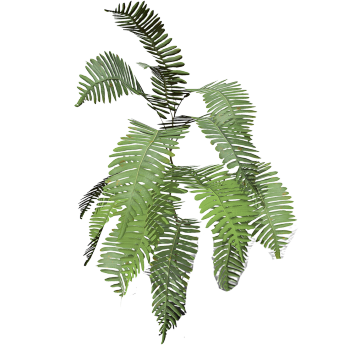
Polypod fern cluster
Polypodia vulgaris L. and Polypodia virginianum L. are the rhizomes of water dragon orthopedic plants. The multi legged fern is distributed in the northeastern part of Xinjiang, China. The Northeast multi legged fern is distributed in Northeast China, North China, and other areas. It has the effect of clearing heat, removing dampness, and detoxifying. Commonly used for damp heat gonorrhea, rheumatoid arthritis, boils, abscesses, rubella itching, and traumatic injuries.
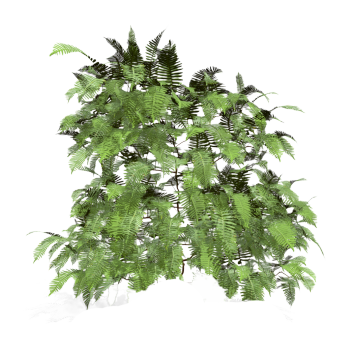
Polypod fern cluster
Polypodia vulgaris L. and Polypodia virginianum L. are the rhizomes of water dragon orthopedic plants. The multi legged fern is distributed in the northeastern part of Xinjiang, China. The Northeast multi legged fern is distributed in Northeast China, North China, and other areas. It has the effect of clearing heat, removing dampness, and detoxifying. Commonly used for damp heat gonorrhea, rheumatoid arthritis, boils, abscesses, rubella itching, and traumatic injuries.

Epimedium herb
Epimedium brevicornu Maxim. is a perennial herbaceous plant in the Berberidaceae family, typically ranging in height from 20 to 60 centimeters; The rhizomes are thick and short, dark brown in color; The complete leaves are compound leaves with three branches and long stalks; Small leaf paper or thick paper, with serrated edges; Flowers white or light yellow; The flowering period is from May to June, and the fruiting period is from June to August. In the book "Annotations to the Classic of Materia Medica", Tao Hongjing mentioned: "In the northern part of Xichuan, there are lustful sheep that gather a hundred times a day and cover themselves with this herb, hence the name Epimedium
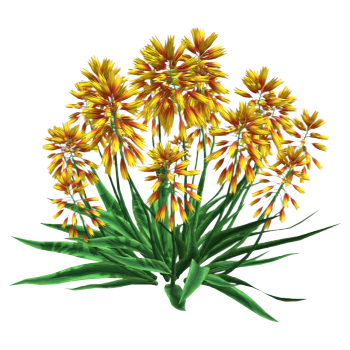
Aloe Vera Flower
Aloe vera (L.) Burm f. It is a herbaceous plant of the family Aphrodiaceae in the order Liliales. Perennial, evergreen, with short above ground stems; The leaves are thick and juicy, with a narrow lanceolate shape, a wide pink green base, and thorny small teeth on the edges; Flowers have yellow or red spots; The fruit is triangular in shape; The flowering period is at the end of winter. The character "lu" in aloe vera means black, while the character "hui" means gathering. Aloe vera is named "aloe vera" because the liquid that drips down from the cut of its leaves will change from coffee color to black and gradually coalesce.

Luofu Maima Vine Fruit
Gnetum luofuense C. Y. Cheng is a vine plant belonging to the Gnetum family and the Gnetum genus. Round stems and branches, purple brown skin, shallow and inconspicuous skin pores; Leaves thin or slightly leathery, oblong or oblong ovate in shape, apex short and gradually pointed, base nearly rounded or broadly wedge-shaped, extending from the midrib nearly flat, small veins reticular, more prominent on the back of the leaf; No male or female flowers were observed; Mature seeds are rectangular and elliptical in shape, with a slightly pointed tip at the top, a wide and round base, no stem, and a wide and flat navel. Luofu Maima Teng can dispel wind and dampness, promote blood circulation and remove blood stasis when used as medicine; Stem and leaf treatment for injuries caused by falls, rheumatism, and bone pain.

Multi flowered Penglai Ge fruit
Gardneria multiflora Makino is a plant species in the family Malvaceae, belonging to the Penglai Ge genus. It is an evergreen climbing vine. Branches cylindrical, with obvious leaf scars, hairless. Chanpingbian, Menghai, Lancang, Fengqing, Funing, Xichou, Malipo, Guangnan and other places; Born in mountainous forests at an altitude of 500-2100 meters.

Clerodendrum canescens
Clerodendrum canescens Wall. is a shrub plant of the genus Clerodendrum in the family Lamiaceae. Gray haired young branches with slightly four edges, densely covered with long soft hairs; Leaves heart-shaped or broadly ovate, base heart-shaped or nearly truncated; The inflorescence is densely clustered into a head shape, with bracts ovate or elliptical, lobes ovate or broadly ovate, corolla white or light red, crown tube deep blue to black, red centimeter, lobes inverted ovate, long circular, and covered with calyx; The drupe is nearly spherical in shape; The flowering and fruiting period is from April to October. Grey haired Daqing has the effects of nourishing yin and clearing heat, promoting lung function and eliminating phlegm, dispelling wind and relieving pain, cooling blood and stopping bleeding in traditional Chinese medicine. It is mainly used for treating colds and high fever.

Cat's eye grass
Chrysosplenium grayanum, a traditional Chinese medicine name. The whole plant of Euphorbia escula L. [Euphorbia lunulata Bunge], a plant belonging to the family Euphorbia and genus Euphorbia. The plant cat eye grass is distributed in Northeast China, Inner Mongolia, Hebei, Shaanxi, Shandong, Jiangsu and other places. It has the effects of relieving cough, eliminating phlegm, dispersing nodules, dispelling water, removing toxins, and killing insects. Indications include phlegm retention, cough and wheezing, edema, scrofula, scabies, and unnamed swelling and toxin.
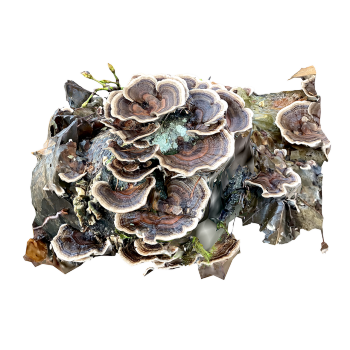
Yunzhi
Yunzhi is one of the most medicinal fungi, with functions such as clearing heat, detoxifying, anti-inflammatory, anti-cancer, and hepatoprotective. Yunzhi, also known as "turkey tail", has very recognizable features. It may be a forest fungus named after a bird, named after local features rather than the whole. The fruiting body of the colored velvet cap fungus is one year old. Leafy to semi fibrous, lateral without stems, often covered in tile like folds, often connected to the left and right, the fruiting bodies that grow on the cross-section of the stump or fallen wood often enclose in a lotus seat shape.

Shanjiao
Piper hancei Maxim. is a climbing vine in the Piperaceae family, with a length of several to over 10 meters. It is hairless except for the inflorescence axis and bract stalk; Leaves are paper or nearly leathery, with a short pointed or gradually pointed tip at the top, a gradually narrowed or wedge-shaped base, and usually obvious reticular veins; The leaf sheath is about half the length of the petiole. Flowers are unisexual, dioecious, and clustered into spike like inflorescences opposite to leaves. The total stem is equal or slightly longer than the petiole, the bracts are nearly circular, and the filaments are short. The ovary is nearly spherical, the berry is spherical, yellow, and blooms from March to August. Shanjiao is mainly used as medicine, with the effects of promoting qi circulation, relieving pain, dispelling wind and reducing swelling, and can treat rheumatoid arthritis.

Warm ground moss specimen
Warm ground moss is an important medicinal moss plant with good therapeutic effects on cardiovascular diseases. Plants of the genus Bryum in the family Bryaceae. Short and large in size, bright green, slightly glossy, scattered in patches. The stem is full of vigor, creeping and extending. The lower leaves of the upright stem are small and scale like, covered with tiles and sticking to the stem. The top leaves are clustered in a large flower bud shape, long in an inverted or long tongue shape, sharp and pointed; Leaf edge differentiation, upper part toothed, lower part slightly rolled back; The middle rib is single and extends up to the tip of the leaf; The leaf cells are thin-walled, hexagonal, and the base cells are rectangular. Dioecious plant. Capsule stalk grows at the top of a straight stem, clustered in single or multiple clusters. The sporangia are cylindrical, arranged horizontally or heavily inclined.

Tiger ear grass specimen
Tiger ear grass belongs to the family of tiger ear grass and is a perennial herbaceous plant with long glandular hairs on its stem; The basal leaves have long petioles, and the leaves have heart-shaped, kidney shaped, and oblate shapes; The stem and leaves are lanceolate in shape, with cone-shaped inflorescence, and the flowering and fruiting period is from April to November. Named after its large leaves resembling tiger ears, it was first recorded in a local herbal book during the Southern Song Dynasty called "Lu Yan Ben Cao". Tiger ear grass is distributed in provinces such as Anhui, Fujian, Guangdong, Guangxi, Guizhou, and southeastern Gansu in China, as well as in North Korea and Japan; It mainly grows under forests, shrubs, meadows, and damp rock crevices at an altitude of 400-4500 meters.

Houttuynia cordata specimen
Houttuynia cordata is a medicinal herb included in the Chinese Pharmacopoeia, sourced from the dried aboveground parts of the three white grass family plant, Houttuynia cordata. In summer, when the stems and leaves are lush and the flowers and ears are abundant, they should be harvested, removed of impurities, and dried in the sun. The stem is flattened cylindrical, twisted, and 20-35cm long; The surface is brownish yellow, with several longitudinal edges, obvious nodes, and residual fibrous roots on the lower nodes; Crispy and easy to break. Leaves grow alternately, with rolled and wrinkled leaves that flatten into a heart-shaped shape, measuring 3-5cm in length and 3-4.5cm in width; Sharp apex, entire margin; The upper surface is dark yellow green to dark brown, and the lower surface is gray green or gray brown; The petiole is slender, and the base forms a sheath like structure with the supporting leaves. When crushed, it has a fishy odor.

Popular Models
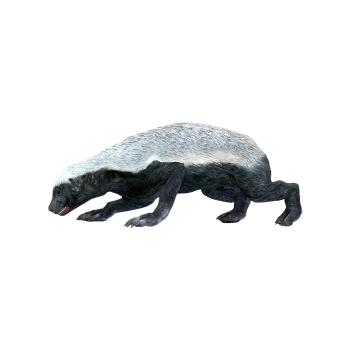
Honey Badger (3D animated model)
192 View
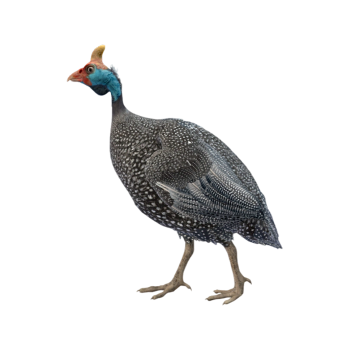
Guinea fowl (3D animated model)
163 View
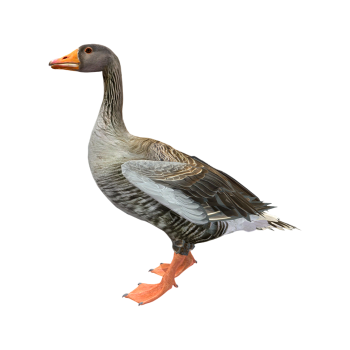
Wild Goose (3D animated model)
185 View
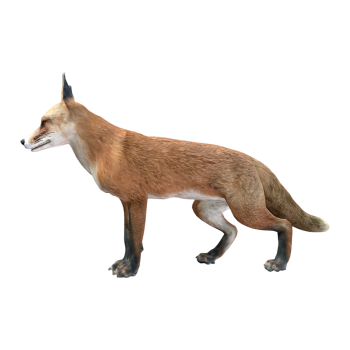
Red Fox (3D animated model)
153 View
Random Model

frog
940 View


Yeezy 350 V2 sneaker
912 View


Dodge DF4 Carbon Fiber Racing Bike
705 View

Willys Jeep SAS Desert Patrol
748 View

Coastal maple fruit
871 View